
Employee benefits have traditionally been treated as a static package — something you offer, communicate once, and revisit annually.
But employees aren’t static. Their needs change as their careers progress, their personal lives evolve, and their priorities shift.
That’s where many organisations fall short.
The most effective businesses are now taking a different approach — aligning benefits with the employee lifecycle.
A graduate entering their first role has very different priorities from a mid-career parent or an employee approaching retirement.
Yet many organisations still offer the same benefits, in the same way, to everyone.
The result?
Aligning benefits with the employee lifecycle changes this completely.
Instead of a fixed package, benefits become a relevant, evolving part of the employee experience.
Benefits are no longer a “nice to have.” They are a powerful driver of attraction, engagement, and retention.
When aligned to the lifecycle, they can:
Organisations that integrate wellbeing into their lifecycle approach move from reacting to issues to proactively supporting their people.
The impact is significant — employees who feel supported are far less likely to burn out or look elsewhere.
To be effective, benefits need to evolve alongside the employee journey.
A lifecycle-led approach might look like:
When benefits are aligned like this, they feel purposeful — not promotional.
Across the lifecycle, three areas consistently make the biggest difference:
Psychological safety & mental health
As responsibilities grow, so should support. Access to counselling, wellbeing apps, and “recharge” initiatives helps prevent burnout before it starts.
Financial & physical wellbeing
From pensions and debt management to health screenings and ergonomic support, benefits must reflect real-life pressures — not just workplace needs.
Flexibility
Flexibility is no longer a perk. It’s a core expectation. Whether through hybrid working, compressed hours, or phased returns, flexibility supports long-term retention.
Aligning benefits with the lifecycle doesn’t require a complete overhaul — but it does require intention. Employees typically take 3 – 5 uses to become comfortable with accessing shopping discounts, for instance.
A simple starting point is a “wellbeing audit”:
This turns benefits from “what we offer” into “what people actually use.”
Today’s workforce expects more than salary alone.
In fact, many employees would choose better benefits over a pay increase — especially when those benefits support their everyday lives.
When you help employees stretch their income, support their wellbeing, and balance work with life, you send a clear message:
👉 We understand what matters to you.
And that’s what builds loyalty.
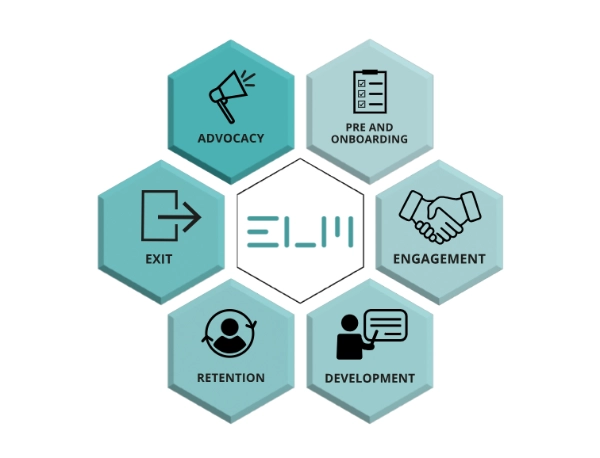
At SSLPost, we see employee benefits as a key part of the wider Employee Lifecycle — not a standalone feature.
Through ELMhub, organisations can bring together:
…into one seamless, accessible experience.
This ensures employees not only have access to benefits — but actually engage with them.
👉 Want to explore how aligning benefits with the employee lifecycle can improve retention, wellbeing, and performance?
Download our latest white paper to discover how to make benefits a strategic advantage.
Exclusive resources for forward-thinking organisations
Gain insights from our latest whitepapers — crafted to help you lead, adapt, and grow. Explore proven strategies, expert perspectives, and practical guidance.